
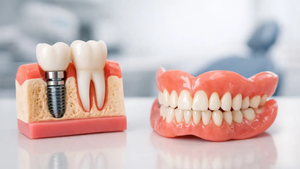
For seniors replacing missing teeth, dentures cost less upfront and require no surgery, while implants (including implant-supported dentures) offer far greater stability, comfort, and bone preservation but cost more and involve a surgical procedure. Traditional dentures can slip and may need adhesive, whereas implants stay firmly in place and let you eat and speak confidently. Many people in their 60s and 70s find implant-supported dentures the ideal middle ground – the security of implants with the coverage of a denture. The best choice depends on your bone health, budget, and lifestyle.
If you’re in your 60s or 70s and facing missing teeth, you have better options than ever. The classic choice is dentures versus implants – but there’s also a middle path that combines both. Here’s an honest comparison to help you decide what fits your life.
The three main options
Traditional dentures
Removable appliances that replace a full arch (or several teeth) and rest on the gums. They’re the most affordable option and require no surgery, but they can slip, may need adhesive, and don’t stop the gradual bone loss that follows tooth loss.
Dental implants
Titanium posts placed in the jaw that hold fixed replacement teeth. They’re the most stable and natural-feeling option and preserve jawbone, but they cost more and involve surgery and healing time.
Implant-supported dentures (the middle ground)
A denture that snaps onto or is fixed to a few implants. You get the security and bone benefits of implants with the coverage of a denture – often at a lower cost than replacing every tooth with an individual implant. For many seniors, this is the sweet spot.
Side-by-side comparison
| Factor | Traditional dentures | Implants / implant-supported |
| Upfront cost | Lowest | Higher |
| Stability | Can slip; may need adhesive | Stay firmly in place |
| Chewing ability | Limited for some foods | Close to natural teeth |
| Preserves jawbone? | No | Yes |
| Surgery required? | No | Yes |
| Care | Remove and clean daily | Cleaned like natural teeth (or removable snap-on) |
| Longevity | Relined/replaced over time | Implants built to last many years |
Why bone preservation matters: when teeth are gone, the jawbone slowly shrinks, which can change facial appearance and make dentures fit poorly over time. Implants stimulate the bone like natural roots, helping maintain both fit and facial structure.
It’s not too late for implants
A common myth is that you’re too old for implants in your 60s or 70s. Age itself is rarely the deciding factor – overall health and bone quality matter far more. Many patients in this age range are excellent implant candidates, and solutions like All-on-4 are specifically designed to work even when some bone loss has occurred.
How to choose what’s right for you
Consider these questions:
- How important is stability? If slipping dentures would bother you, implants or implant-supported dentures are worth serious consideration.
- What’s your budget and timeline? Dentures are faster and cheaper upfront; implants are an investment that pays off in comfort and longevity.
- How’s your bone health? A quick scan tells your dentist which options are available to you.
- What do you want to eat? If enjoying a full range of foods matters, fixed implant solutions come closest to natural teeth.
A personalized recommendation
There’s no one-size-fits-all answer – the right choice is the one that fits your health, budget, and how you want to live. An exam and 3D scan give your dentist what’s needed to lay out your realistic options and recommend the solution that will serve you best for years to come.
Frequently asked questions
Are implants or dentures better for seniors?
Neither is universally better. Dentures cost less and need no surgery, while implants offer far greater stability, comfort, and bone preservation at a higher cost. Many seniors find implant-supported dentures the ideal middle ground. The best choice depends on bone health, budget, and lifestyle.
Am I too old for dental implants in my 60s or 70s?
Age itself is rarely the deciding factor – overall health and bone quality matter far more. Many patients in their 60s and 70s are excellent implant candidates, and solutions like All-on-4 are designed to work even with some bone loss.
What are implant-supported dentures?
They’re dentures that snap onto or are fixed to a few dental implants, combining the stability and bone-preservation benefits of implants with the coverage of a denture. For many seniors they offer security at a lower cost than replacing every tooth individually.
Do dentures cause bone loss?
Traditional dentures don’t stop the gradual jawbone loss that follows tooth loss, which can change facial appearance and affect denture fit over time. Implants stimulate the bone like natural roots, helping preserve it.
Which option lets me eat normally?
Fixed implant solutions come closest to natural teeth, allowing a full range of foods. Traditional dentures can limit chewing for some foods and may slip. If enjoying all your favorite foods matters, implant-based options are worth considering.
Related pages
Find your best option in Mansfield
Whether dentures, implants, or a combination is right for you, 360 Dental Lounge will give you an honest, personalized recommendation. Book a consultation and Dr. Doshi will review your options and answer every question.
Request an appointment or call (682) 888-0488.
This article is for general educational purposes and is not a substitute for professional dental advice, diagnosis, or treatment. Costs, timelines, and candidacy vary by individual – please confirm specifics during a consultation.