Cost is the second most common reason people avoid the dentist, right after anxiety. When you combine the two, you get a significant number of Grand Prairie residents who need sedation dentistry but assume they can’t afford it. The reality is more nuanced than that. Sedation dentistry does add cost to a dental procedure. Still, there are multiple levers available to make it manageable, and the long-term cost of avoiding care almost always exceeds the short-term cost of getting it done comfortably.
This article breaks down what sedation dentistry typically costs, which factors influence the price, and the payment and financing options available to Grand Prairie patients.
Why sedation dentistry costs vary so much
If you’ve searched for sedation dentistry pricing online, you’ve probably noticed that you can find cost estimates ranging from under a hundred dollars to well over a thousand for what seems like the same service. That range exists because several variables affect the final price, and comparing across those variables without context is misleading.
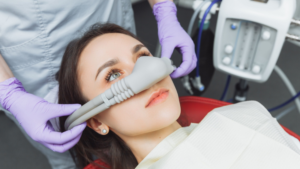
The type of sedation is the biggest price driver. Nitrous oxide is the least expensive option. It requires minimal equipment (a mask, a gas supply, and monitoring), doesn’t require extensive pre-procedure screening, and the dentist’s overhead for offering it is relatively low.
Oral conscious sedation is moderately priced. The medication itself is inexpensive (a single pill), but the appointment requires more of the dental team’s time: a pre-sedation health review, a longer appointment to account for the medication’s onset, continuous monitoring during the procedure, and a post-procedure recovery period in the office.
IV sedation is the most expensive option. It requires specialized training (and a Texas sedation permit), dedicated monitoring equipment, emergency preparedness protocols, and often an additional trained team member in the treatment room during the procedure. The overhead to offer IV sedation safely is genuinely higher, and that cost is reflected in the fee.
The procedure itself also matters. Sedation for a single filling is a different situation than sedation for a full-arch implant case that takes several hours. Longer procedures require more sedation medication, more monitoring time, and more staffing, all of which affect cost.
Geography plays a role too. Dental fees in DFW generally track the cost of living in the specific area, and practices in higher-overhead locations tend to charge more. Grand Prairie and the nearby Mansfield corridor tend to be moderately priced relative to Dallas or Fort Worth proper.
Understanding the two-part cost structure
Here’s something many patients don’t realize: the cost of sedation is almost always separate from the cost of the dental procedure itself. When your dentist quotes a fee for, say, a dental implant, that fee covers the implant, the abutment, the crown, and the associated lab work, but it typically doesn’t include the sedation. The sedation fee is an additional line item.
This matters for budgeting purposes. When evaluating affordability, ask your dentist’s office for a total estimate that includes both the procedure fee and the sedation fee as separate line items. This gives you a clear picture and prevents the unpleasant surprise of a higher-than-expected bill.
Does dental insurance cover sedation?
The short, frustrating answer: it depends. Dental insurance coverage for sedation is inconsistent across plans and carriers.
Some plans cover sedation when it’s deemed “medically necessary.” This might apply if you have a documented dental phobia diagnosis, a medical condition that makes it difficult to tolerate dental treatment without sedation (such as severe developmental disabilities or movement disorders), or if you’re undergoing a surgical procedure where sedation is considered part of the standard of care.
Other plans exclude sedation entirely, treating it as an elective comfort service regardless of the clinical situation.
And some plans cover nitrous oxide but not oral or IV sedation, or cover sedation for surgical procedures but not for restorative work.
The only way to know what your specific plan covers is to call your insurance company or ask your dentist’s office to verify benefits on your behalf. Many dental practices that offer sedation regularly will handle this verification for you; it’s in their interest to give you accurate cost information upfront rather than dealing with billing disputes later.
Payment and financing options for sedation dentistry near Grand Prairie
For the portion of sedation costs not covered by insurance (or for patients without dental insurance), several financing options exist.
Third-party healthcare financing companies like CareCredit, Cherry, and Sunbit offer revolving credit lines specifically designed for medical and dental expenses. Many of these programs offer promotional periods with 0% interest if the balance is paid within a set timeframe (often 6, 12, or 24 months). The application process is typically quick and can often be completed in the dental office before your procedure.
Some dental practices offer in-house membership or savings plans for uninsured patients. These typically involve an annual fee that covers preventive care (exams, cleanings, X-rays) and provides discounted rates on other procedures, including sedation. The discount varies by practice, but it’s worth asking about, especially if you’re planning multiple procedures that will each require sedation.
FSA (Flexible Spending Account) and HSA (Health Savings Account) funds can be used for sedation dentistry when it’s part of a dental procedure. If you have an FSA or HSA through your employer, sedation is a legitimate qualified expense. This effectively lets you pay for sedation with pre-tax dollars, which amounts to a 20-30% savings depending on your tax bracket.
Credit cards are always an option, though they typically carry higher interest rates than healthcare-specific financing programs. If you’re going to use a credit card, check whether you have one with a 0% introductory APR on purchases; this can function similarly to a CareCredit promotional period.
The hidden cost of not getting sedation
It’s worth stepping back and considering the economic argument for sedation from a different angle. If dental anxiety prevents you from getting care, the dental problems you’re avoiding don’t stay static. They get worse. A cavity that could have been filled for a few hundred dollars becomes a root canal and crown costing several times more. A tooth that could have been saved with timely treatment may eventually need extraction and replacement with an implant, one of the most expensive single procedures in dentistry.
Many patients who finally come in after years of avoidance need multiple procedures across multiple appointments. Some of those patients choose to have everything done in one or two longer sedation appointments rather than stretching it across eight or ten unsedated visits. In that scenario, sedation doesn’t just reduce anxiety; it reduces the total number of appointments, the total time off work, the total number of drives to the dental office, and often the total treatment cost compared to the staged alternative.
How 360 Dental Lounge approaches sedation affordability
360 Dental Lounge in Mansfield, about 12 minutes from most of Grand Prairie via Lake Ridge Parkway, accepts most PPO dental insurance plans and will verify your sedation coverage before your appointment so you know exactly what to expect.
For costs not covered by insurance, the practice offers financing through CareCredit, Cherry, and Sunbit, including 0% interest promotional options. They also accept FSA and HSA payments and all major credit cards.
For uninsured patients, the practice’s in-house membership plan provides discounted rates on procedures and sedation, with no annual maximums, which matters if you need extensive work completed under sedation.
The practice’s position is straightforward: if anxiety is the barrier between you and dental care, the cost of sedation shouldn’t be the barrier between you and sedation. Their team will work through the numbers with you before committing to any treatment, so there are no surprises.
Questions to ask before your sedation appointment
When you call a dental office to discuss sedation dentistry, whether it’s 360 Dental Lounge or another practice near Grand Prairie, here are the practical financial questions to ask.
What types of sedation do you offer, and what does each one cost? Is the sedation fee separate from the procedure fee, and can I get a combined estimate? Will you verify my insurance coverage for sedation before my appointment? Do you offer financing through CareCredit, Cherry, Sunbit, or a similar program? Do you have an in-house membership or savings plan for uninsured patients? Can I use my FSA or HSA for the sedation portion of my bill?
Getting clear answers to these questions puts you in control of the decision. Affordability isn’t about finding the cheapest option; it’s about understanding the true cost, knowing your payment options, and making a decision you’re comfortable with financially and emotionally.
FAQs
Q: How much does sedation dentistry cost near Grand Prairie?
A: Costs vary by sedation type and procedure length. Nitrous oxide is the least expensive option. Oral conscious sedation and IV sedation cost more due to additional monitoring, training requirements, and staff time. Ask your dentist for a combined estimate that includes both the procedure and sedation fees.
Q: Is sedation dentistry worth the extra cost?
A: For patients whose anxiety prevents them from getting dental care, sedation can be a sound financial decision. Avoiding the dentist allows problems to worsen, leading to more complex and expensive treatments later. Sedation enables you to get care before small problems become large ones.
Q: Does Delta Dental cover sedation dentistry?
A: Coverage varies by plan. Some Delta Dental plans cover sedation when deemed medically necessary. Contact your specific plan or ask your dental office to verify benefits before your appointment.
Q: Can I use CareCredit for sedation dentistry near Grand Prairie?
A: Yes. CareCredit is widely accepted by dental practices that offer sedation, including 360 Dental Lounge in Mansfield. CareCredit often offers promotional 0% interest periods for qualifying purchases.
Q: Are there payment plans for IV sedation?
A: Many dental offices that offer IV sedation also partner with healthcare financing companies like CareCredit, Cherry, and Sunbit that allow you to spread the cost across monthly payments, often with low or 0% interest promotional periods.
Q: What’s the cheapest form of dental sedation?
A: Nitrous oxide (laughing gas) is generally the least expensive sedation option. However, it provides only mild relaxation and may not be sufficient for patients with moderate to severe dental anxiety or for longer, more complex procedures.
360 Dental Lounge in Mansfield accepts most PPO dental insurance plans and offers 0% financing through Cherry, CareCredit, and Sunbit for sedation procedures. Their in-house membership plan also provides discounted rates for uninsured patients. Call (682) 888-0488 to discuss your options.