
Dental Implant Failure & Salvage in Mansfield, TX
Preserving Your Hard-Earned Smile

Quick answer: A failing dental implant usually shows as looseness, pain, bleeding, swelling or pus around the implant. Call us as soon as you notice these signs. Depending on the cause, treatment can range from tightening the crown or deep cleaning and antibiotics to removing the implant and replacing it after the area heals.
Dental implants have a high success rate, and most last for many years. However, certain risk factors raise the chance of problems. If you notice signs of a failing implant, including one placed at another office, our team can examine it, find the cause and explain your options. Call us to schedule an appointment or to get your questions answered.
Why Choose 360 Dental Lounge for Dental Implant Failure & Salvage?
- Dentist Who Has Placed 3,000+ Dental Implants
- Accurate Diagnoses with Advanced Digital Imaging
- Insurance Accepted & Financing Available
Why Do Dental Implants Fail?
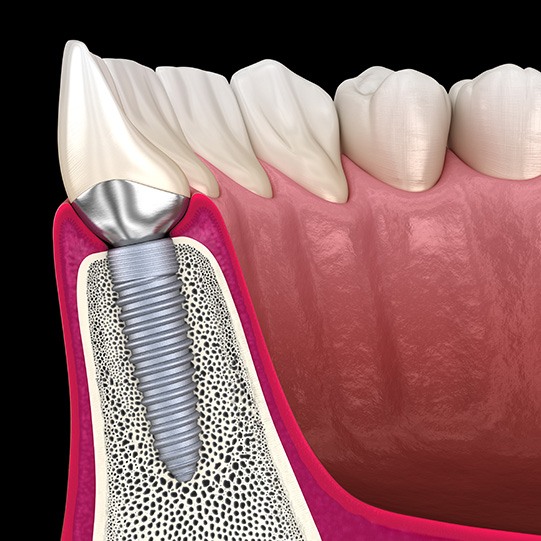
One of the most common causes of dental implant failure is an infection that develops after dental implant placement, called peri-implantitis. This is a destructive infection that attacks the tissue and bone surrounding a dental implant that helps support it. It can lead to a variety of uncomfortable symptoms, like pain, and ultimately result in the removal of dental implants if the infection is left to progress. Some other additional issues that could lead to implant failure include:
- Failure to fuse with the jawbone.
- Physical trauma that dislodges an implant.
- Health conditions that affect healing, such as poorly controlled diabetes.
- Smoking, which slows healing and raises the risk of infection.
- Heavy grinding or clenching that overloads the implant.
Signs of Failing Dental Implants
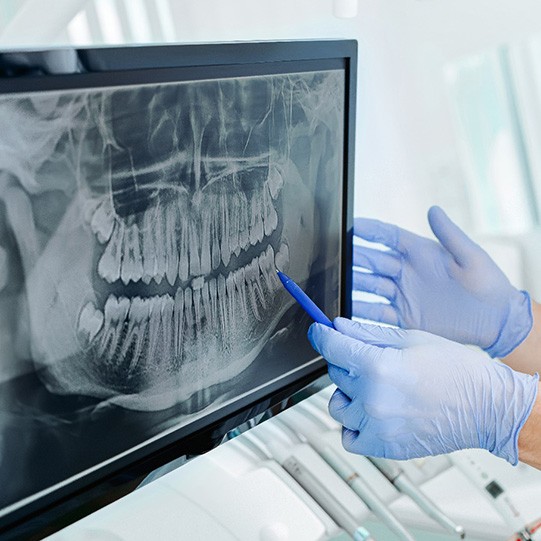
Dental implant failure can cause a variety of different symptoms. It’s crucial to call your dentist as soon as you notice any of the following signs soon after your implant placement or years down the road:
- Out of the ordinary, lingering pain. Keep in mind that following your surgery, you’ll likely feel sore and slightly uncomfortable. However, once your implants fuse with the jawbone, they should feel like an integral, natural part of your smile.
- A loose dental implant. This can be caused by trauma, infection that has deteriorated the supportive structures of the dental implant, or poor oral hygiene.
- Bleeding, inflammation, or pus. These are all signs of infection that require urgent treatment.
- Difficulty chewing or speaking. After you have healed from your dental implant procedure, your restorations should function like your natural teeth, so you can eat most foods comfortably.
How Does Dental Implant Salvage Work?

If you notice any of the signs above, call our team. We’ll schedule an appointment to conduct a thorough evaluation of your restorations and gums to determine the underlying cause of your symptoms. In some cases, a loose restoration could just need to be reattached to the abutment, while others may require deep dental cleanings, antibiotics, or other treatments focused on infection control.
If your dental implant, restoration, or the bone and tissue supporting your implant are damaged beyond repair, we may need to remove the implant. In many cases a new implant can be placed after the area heals, sometimes with a bone graft first. Our team will discuss every option with you so you can make an informed decision.
How to Lower the Risk of Implant Problems
- Brush twice a day and clean around the implant with floss or a water flosser.
- Keep your regular checkups and cleanings so early problems are found.
- Avoid smoking, especially while the implant is healing.
- Wear a nightguard if you grind or clench your teeth.
Dental Implant Failure FAQs
Can a failed dental implant be replaced?
Often, yes. The failed implant is removed and the area is allowed to heal, sometimes with a bone graft. A new implant can then be placed once the bone is strong enough.
Is a loose implant an emergency?
A loose implant crown is not always serious, but a loose implant post or pain, swelling or pus around it should be checked as soon as possible. Acting quickly gives the best chance of saving the implant.
Explore Your Tooth Replacement Options
- Dental Implants – replace one tooth, several teeth or a full arch.
- All-on-4 Dental Implants – a fixed full arch of teeth on four implants.
- Dentures & Implant Dentures – full, partial and implant-supported dentures.
- Dental Bridges – a fixed option for one or a few missing teeth.
- Dental Implant Failure & Salvage – help for a loose, painful or infected implant.
- Dental Financing and Dental Insurance – ways to pay for treatment.